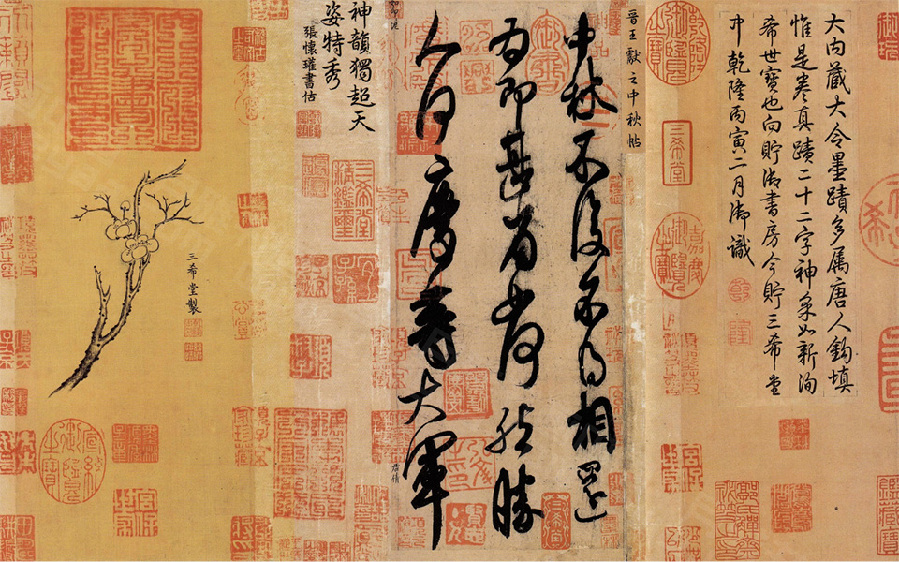
Wang Xianzhi
Introduction
Wang Xianzhi (344–386) was a renowned Chinese calligrapher during the Eastern Jin Dynasty. He was the seventh son of the illustrious calligrapher Wang Xizhi, and like his father, Wang Xianzhi is celebrated for his contributions to the art of Chinese calligraphy.
Early Life and Education
Wang Xianzhi was born into a family with a rich tradition in calligraphy. His father, Wang Xizhi, is often referred to as the "Sage of Calligraphy," and his influence on Wang Xianzhi's development as a calligrapher was profound. Under his father's tutelage, Wang Xianzhi began to cultivate his skills from a young age. Despite the high expectations placed upon him due to his father's reputation, Wang Xianzhi established his own distinct style, which gained substantial acclaim.
Calligraphic Style
Wang Xianzhi's style was characterized by its fluidity and elegance, distinguishing it from his father's more structured approach. He is particularly noted for his mastery of the "running script" (xingshu) and the "cursive script" (caoshu), which allowed for greater expression and individuality in writing. His works are considered exemplary for their dynamism and the ease with which they convey the spirit of the text. Wang Xianzhi's contributions were pivotal in the transition from the more formal "clerical script" (lishu) to the expressive cursive styles that became prominent during and after his time.
Legacy and Influence
Wang Xianzhi's influence on Chinese calligraphy is second only to that of his father. Together, the Wang family is credited with setting the standard for calligraphic excellence, and their styles were emulated by countless practitioners in subsequent generations. His works, are critical to the study of Chinese calligraphy and are valued for their artistic innovation.
Wang Xianzhi's calligraphy was often included in the fa tie, or model calligraphy rubbings, which were used as teaching tools and exemplars for students of the art. These rubbings helped disseminate his style and cemented his influence in the canon of Chinese calligraphy.
Notable Works and Collections
Several of Wang Xianzhi's pieces have been preserved through copies and rubbings, as original works on silk and paper have largely not survived the passage of time. His notable works include the "E'qun Letter" and examples of his single-stroke script, which demonstrate his skill in maintaining fluid continuity across a text without lifting the brush. These pieces have been studied extensively and are prized for their technical mastery and artistic beauty.
The legacy of Wang Xianzhi's calligraphy can be seen in its enduring presence in exhibitions and collections, such as those held by the Palace Museum in Beijing. His style continues to be a significant subject of study for calligraphers and scholars alike, reflecting the enduring appeal and historical importance of his contributions to Chinese cultural heritage.
Recognition and Exhibitions
Wang Xianzhi's work has been recognized and celebrated through numerous exhibitions across China and internationally. His contributions have been featured in online exhibitions organized by cultural institutions that showcase ancient Chinese art and calligraphy, emphasizing the historical and aesthetic value of his works. These exhibitions highlight the enduring legacy of Wang Xianzhi and his impact on the development of Chinese art and calligraphy.








